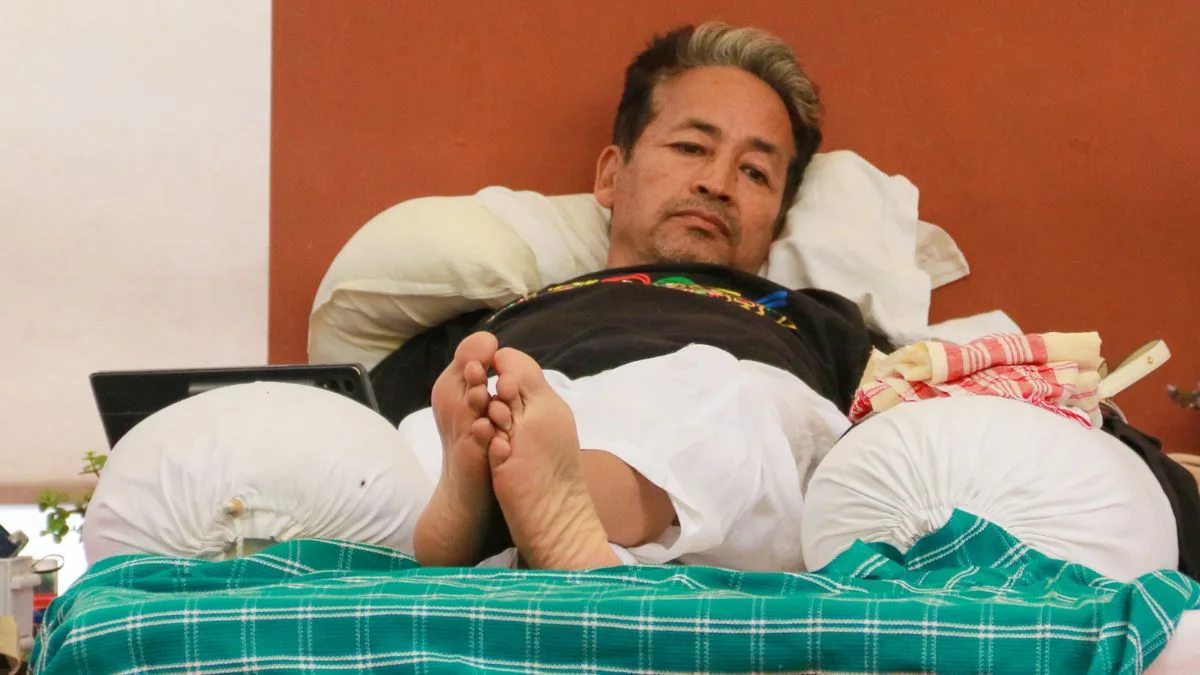
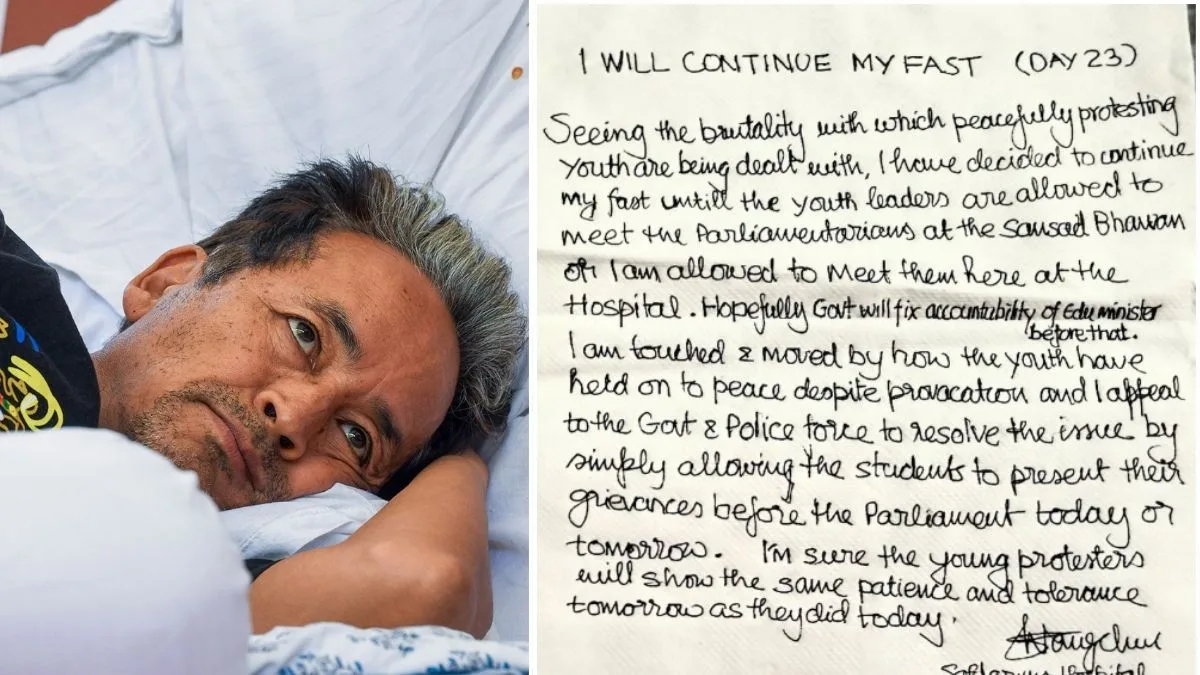
The Delhi High Court on Monday agreed to urgently hear an appeal filed by climate activist Sonam Wangchuk’s wife, Dr. Gitanjali J. Angmo. The appeal challenges the decision of a Single Judge who refused to order Wangchuk’s transfer from Safdarjung Hospital to a private hospital chosen by him.
A Division Bench of Chief Justice Devendra Kumar Upadhyay and Justice Tejas Karia accepted the request for an urgent hearing after Senior Advocate Akhil Sibal, appearing for Dr. Angmo, mentioned the matter before the court. The Bench fixed the hearing for 2:30 PM on Monday.
Advertisement
During the mentioning of the case, Solicitor General Tushar Mehta, representing the Union Government, requested that the hearing be postponed until Tuesday. However, after hearing both sides, the Bench decided to take up the appeal the same afternoon.
Appeal questions single judge’s decision
The appeal comes a day after Justice Mini Pushkarna refused to grant interim relief allowing Wangchuk to move to a private medical facility.
According to the appeal, the earlier order violates Wangchuk’s fundamental rights, including bodily autonomy, informed consent and personal liberty. It argues that the order leaves the final decision about his treatment entirely with doctors at Safdarjung Hospital, taking away the right of Wangchuk and his wife to choose his medical care.
The appeal says the court did not properly consider the legal principle that a mentally competent patient has the right to accept, refuse or stop medical treatment after giving informed consent.
Claims of unlawful confinement
Dr. Angmo’s plea also argues that although the Single Judge acknowledged that Wangchuk is neither under arrest nor in detention, the order effectively keeps him confined to Safdarjung Hospital without any legal authority.
The appeal claims this amounts to a violation of his rights under Article 21 of the Constitution because it allows medical intervention without his consent. It relies on Supreme Court judgments in Common Cause v. Union of India and Samira Kohli v. Dr. Prabha Manchanda, which recognise a competent patient’s right to make informed medical decisions and state that treatment without free and informed consent is allowed only in limited emergency situations.
Hunger strike rights also raised
The appeal further argues that Wangchuk’s continued stay at Safdarjung Hospital prevents him from continuing his peaceful hunger strike and protest at Jantar Mantar. It says this affects his rights under Articles 19 and 21 of the Constitution.
Referring to the Supreme Court’s ruling in the Ramlila Maidan Incident case, the appeal states that a hunger strike is a constitutionally protected form of peaceful protest and cannot be stopped by forcibly keeping a protester in a hospital unless there is lawful detention.
The plea also states that Wangchuk was not consulted before being shifted to Safdarjung Hospital. It says neither he nor his wife was allowed to choose the hospital or doctors. It further claims there is no evidence that his health had deteriorated to a level requiring such action. According to the appeal, if immediate medical treatment was necessary, the authorities should have first sought permission from the court before removing him from the protest site.
The appeal seeks cancellation of the July 19 order and permission for Wangchuk to be shifted to a private hospital of his choice while protecting his rights regarding medical treatment and personal liberty.
Why the earlier request was rejected
On July 19, Justice Mini Pushkarna refused to direct Wangchuk’s transfer, saying there was no prima facie violation of his personal liberty. The court held that the government shifted him from the protest site to Safdarjung Hospital to protect his life after his medical condition worsened.
The judge noted that Wangchuk had been on a hunger strike for nearly 17 to 18 days. The order also referred to an earlier Division Bench direction issued on July 16, which required daily medical monitoring and necessary treatment to prevent further decline in his health.
After considering submissions from the Union Government and doctors from Safdarjung Hospital and AIIMS, the court observed that Wangchuk’s blood sugar and sodium levels were below normal, while his potassium level created a risk of life-threatening complications.
The court also recorded the government’s statement that intravenous fluids had not been given because Wangchuk had not consented to that treatment. It found that doctors were providing only medicines and oral electrolytes that he had agreed to receive and said there was no material to show that force was being used against him or that his bodily autonomy had been violated.
The court further recorded the Centre’s assurance that Wangchuk’s medical reports would be shared with his family. It directed the Union Government to file a status report and scheduled the main writ petition for further hearing on July 24, 2026.